
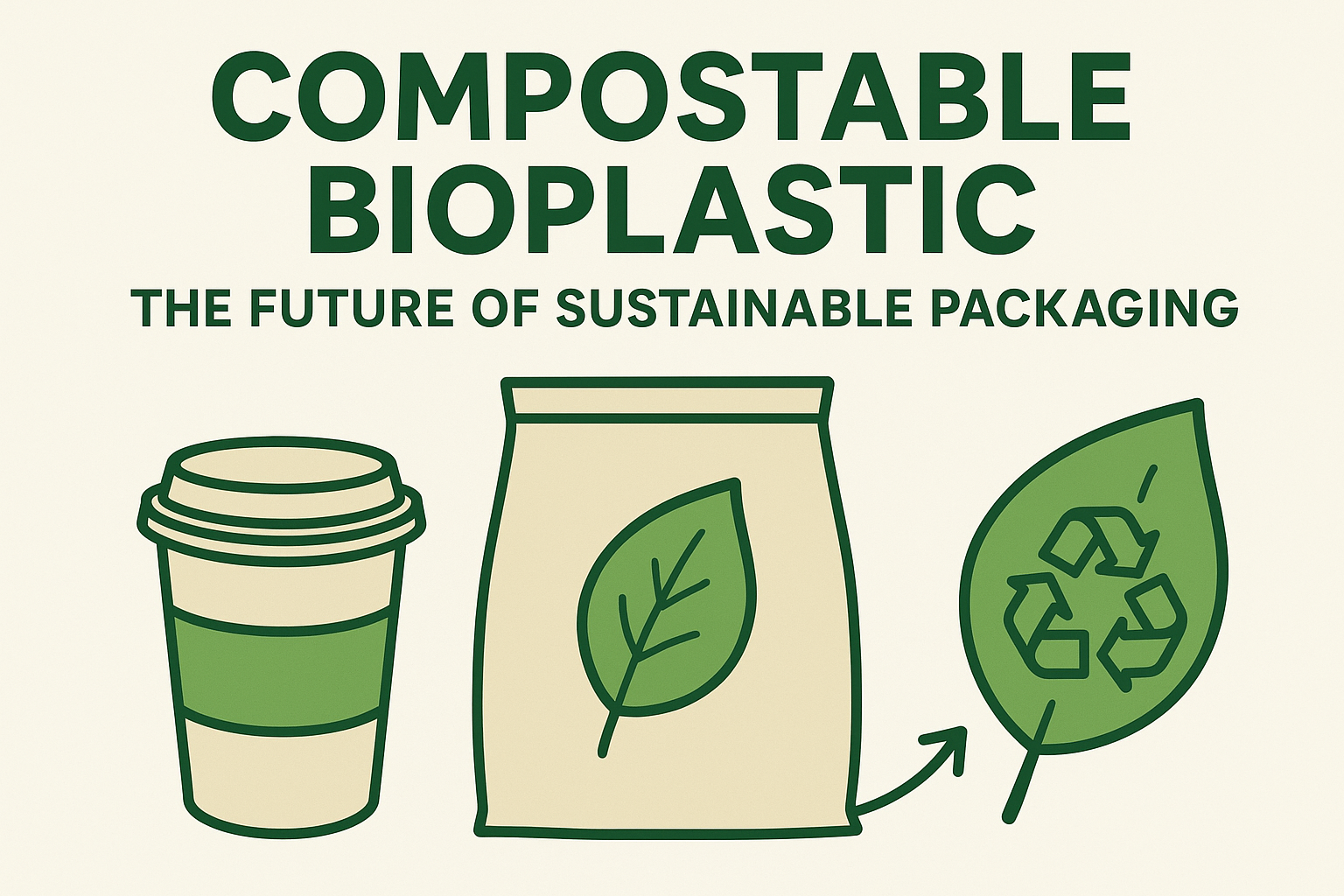
Compostable BioPlastic: The Future of Sustainable Packaging
As the world looks for ways to reduce plastic waste, compostable bioplastics are becoming a game-changer in sustainable packaging. Made from renewable materials like corn starch or sugarcane, these bioplastics offer the same strength and flexibility as regular plastic — but with one major difference: they break down naturally without harming the environment.
What Makes It Compostable?
Compostable bioplastics decompose in composting conditions, turning into water, carbon dioxide, and organic matter within months. This means they leave no toxic residue and can even help enrich the soil.
Why It Matters
- Eco-friendly: Reduces landfill and ocean waste
- Renewable: Made from plant-based materials
- Safe for food use: Perfect for cups, plates, and packaging
- Supports green goals: Helps brands meet sustainability targets
The Future of Packaging
While compostable bioplastics are still developing, they’re quickly becoming the preferred choice for eco-conscious brands and consumers. By switching to compostable packaging, businesses can reduce their carbon footprint and take a real step toward a cleaner planet.
Compostable bioplastics aren’t just an alternative — they’re the future of sustainable packaging.
